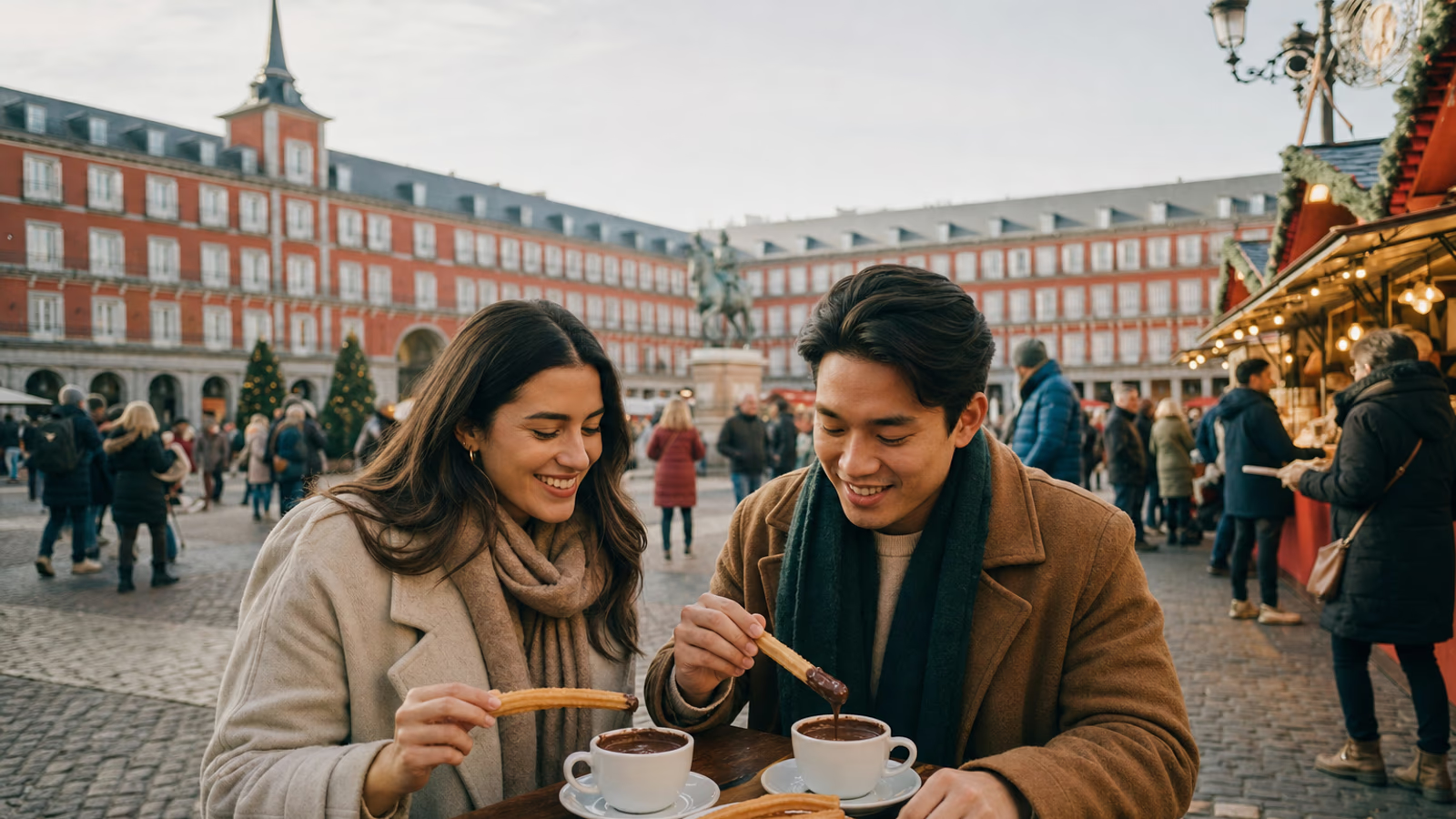
Plaza Mayor's Christmas market is not just about lights and decorations; it's also a culinary delight. Here's what to eat and where to find it.
What food can you find at the Christmas market?
The air in the square is thick with the scent of sugar and spice from the stalls. We think the essential experience is grabbing a paper cone of freshly fried churros, still hot and crispy, and dipping them into a cup of thick, dark hot chocolate. It’s the perfect antidote to a chilly Madrid evening.
Follow the smoky, sweet smell and you'll find vendors roasting chestnuts over open coals, a classic winter scene. If you're after something more substantial, the *bocadillo de calamares* is a Madrid institution. We love how the crispy, golden rings of squid contrast with the soft bread. It's simple. And it's perfect.
Another must-try is the *empanadas*, which come with a variety of fillings such as tuna, beef, or vegetarian options. These flaky pastries are a quick and satisfying snack, perfect for eating on the go as you explore the market. Don't miss the *chistorra* sausages either—these small, spicy sausages are often grilled and served in a small roll, delivering a burst of flavour in every bite.
If you're looking for something heartier, some stalls offer *patatas asadas* (baked potatoes), often loaded with toppings like cheese, ham, or sour cream. These are a comforting option, especially on colder nights. For a more unique taste, try *morcilla* (blood sausage) or *torreznos* (crispy pork belly), which are rich, savoury bites that showcase traditional Spanish flavours.
Where can you find traditional Christmas sweets?
For us, the taste of Christmas here is *turrón* and marzipan. You'll see stalls piled high with artisanal bars—from the crunchy Alicante-style nougat packed with almonds to the softer, chewier Jijona version. Then there are the *polvorones* and *mantecados*, crumbly, almond-based sweets that literally melt in your mouth. They're great to eat right there or take home in one of the vintage-style tins.
What guests ask us every week is if they can try the famous *Roscón de Reyes*. Traditionally, it's an Epiphany cake for January 6th, but the market gives you a sneak peek. We recommend finding a stall selling individual slices of this light, brioche-like ring cake, often scented with orange blossom water and studded with candied fruit. It’s a delicious preview of a major Spanish tradition.
If you have a sweet tooth, also look out for *pestiños*, a deep-fried pastry coated in honey or sugar, and *buñuelos*, small doughnuts often filled with cream or chocolate. These treats are particularly popular during the festive season and are a delightful way to end your market visit.
For something a little different, try *huesos de santo* (saint's bones), marzipan-based sweets filled with egg yolk cream. Though traditionally associated with All Saints' Day, they often make an appearance at Christmas markets. Another indulgent option is *chocolate a la taza*, a thick, rich hot chocolate that pairs perfectly with many of the market's sweet offerings.
Are tapas a good option here?
Honestly, the market itself isn't a tapas hotspot; it's more about specific, festive street food. That said, you can definitely piece together a standing meal. We often see stalls selling small wedges of *tortilla de patatas* or creamy *croquetas*, which are perfect for grabbing a quick, savoury bite while you browse the stalls.
If you're craving a wider selection, the real action is in the labyrinth of streets just off the square. The whole area comes alive, with traditional *tabernas* and modern gastro-bars spilling out onto the pavement. It's the perfect place to dive into a full tapas experience after soaking up the market's atmosphere.
For a truly local experience, head to Calle Cava Baja, just a short walk from Plaza Mayor. This street is famous for its tapas bars, where you can sample everything from *patatas bravas* to *jamón ibérico*. Many of these spots offer a cozy atmosphere, making them ideal for warming up after a chilly evening at the market.
If you're in the mood for seafood, look for *gambas al ajillo* (garlic shrimp) or *pulpo a la gallega* (Galician-style octopus) at nearby tapas bars. These dishes highlight Spain's coastal culinary heritage and are a great way to expand your food journey beyond the market.
There's something about the contrast of hot, crispy squid and soft bread, eaten right in the middle of the bustling square. For us, that's the real taste of Madrid's street food culture.
Should you eat at the market or nearby?
We see it as two distinct but equally great experiences. Eating *in* the market is about grabbing something warm and delicious to hold while you're immersed in the festive chaos. For a sit-down meal, stepping into one of the side streets offers a different energy—a chance to relax, order a few plates, and watch the city go by.
What we know from working here every day is that the market gets incredibly packed on weekend evenings. The atmosphere is electric, but it can be a squeeze. For a more relaxed vibe, we suggest visiting on a weekday afternoon. If you’re planning a sit-down dinner nearby on a Friday or Saturday, booking ahead is a smart move.
For those who prefer a quieter dining experience, consider exploring Mercado de San Miguel, just a few minutes' walk from Plaza Mayor. This historic market offers a wide range of gourmet food stalls, from fresh seafood to artisan cheeses, and provides a more refined setting to enjoy Madrid's culinary offerings.
Another nearby option is La Latina, a neighbourhood known for its vibrant food scene. Here, you'll find plenty of restaurants and bars serving traditional Spanish dishes, as well as some international options. It's a great area to explore if you're looking to extend your culinary adventure beyond the market.
Practical tips for enjoying the market
A couple of practical things we always tell our guests: bring some cash, as the smaller, more traditional stalls often don't take cards. Also, layer up. The heat from the chestnut roasters and the warm chocolate helps, but Madrid gets properly cold in December, especially once the sun goes down.
The market typically lights up from late November through to New Year's Eve, with most stalls open from mid-morning until around 9 p.m. Our advice is to use this guide to plan what you want to try, so you can navigate the buzz and focus on the flavours.
If you're visiting with kids, consider arriving earlier in the day when the market is less crowded. This will give you more time to explore the stalls and enjoy the festive decorations without feeling rushed. Also, don't forget to check out the nearby attractions, such as the Royal Palace and Puerta del Sol, to make the most of your trip.
Lastly, don't forget to bring a reusable bag if you plan to buy any treats or gifts. Many stalls sell beautifully packaged sweets and snacks that make excellent souvenirs or presents for loved ones back home.
More at interhostales.es: Inter Plaza Mayor · Inter Puerta del Sol · our rooms
Further reading: Plaza Mayor's Christmas market · Metro de Madrid · nougat and marzipan
Keep reading: Where to Eat Churros Near Plaza Mayor · Century-Old Taverns Near Plaza Mayor · Where to Try Cocido Madrileño Near Plaza Mayor · What to Try at Mercado de San Miguel: A Foodie's Guide · Best Tapas to Try on Cava Baja Street